Delaware 2026 Fishing Rules Explained: Seasons, Creel Limits & Changes
Delaware may be the nation’s second-smallest state, but its fisheries punch well above their weight. From the freshwater millponds tucked inside state parks to the rolling tidal waters of Delaware Bay and the surf-drenched coastline near Indian River Inlet, this is a state where diversity of water type translates directly into diversity of opportunity — and regulation. Understanding the 2026 framework isn’t just about staying legal. It’s about recognizing why those rules exist and how they keep these fisheries healthy for every angler who follows.
🌊 How Delaware Structures Its Conservation-Driven Fisheries System
Delaware’s approach to fish management is rooted in biological balance, not bureaucratic routine. The DNREC Division of Fish and Wildlife — the state’s primary regulatory authority — builds its harvest frameworks around population data, spawning cycles, and interstate cooperation through bodies like the Atlantic States Marine Fisheries Commission (ASMFC). That last part matters enormously in a state bordered by the Delaware River, Delaware Bay, and the Atlantic Ocean. Several species, especially striped bass, are managed at the regional level, not just within state lines.
Freshwater regulations tend to be more static — driven by pond and river ecology, stocking calendars, and local bass or trout biology. Saltwater possession allowances, however, are subject to more frequent adjustment, and 2026 brings at least one notable shift: black sea bass quotas have increased by roughly 20% following improved stock assessments, while summer flounder and scup remain under status-quo frameworks. These aren’t arbitrary numbers — they reflect science-backed catch modeling designed to keep Delaware’s managed fisheries system functioning long-term.
Understanding this foundation is the starting point for any angler — beginner or experienced traveler — before picking up a rod in the First State.
📍 Where Rules Change: A Regional Water Type Breakdown
Delaware’s regulated catch windows differ based on whether you’re fishing non-tidal freshwater, tidal rivers, bay waters, or open ocean. Here’s how those distinctions shape your day on the water:
| Water Type | Examples | General Open Period | Harvest Style | Key Rule Notes |
|---|---|---|---|---|
| Inland Freshwater Ponds | Lums Pond, Beck’s Pond, Killens Pond | Year-round (most species) | Daily cap / size minimum | No-wake zones for boats; statewide size/creel rules apply |
| Freshwater Streams & Creeks | Brandywine Creek, White Clay Creek | Varies by species; trout-specific windows | Slot limits; fly-fishing zones | Fly-fishing only in designated stretches; no fishing after 30 min past sunset in trout areas |
| Tidal River Corridors | Delaware River (tidal), Christina River | Species-specific | Slot-based / single-fish limits | Striped bass catch-and-release only on spawning grounds Apr 1–May 31 |
| Delaware Bay | Broad Bay waters | Seasonal per species | Daily possession cap | Summer striped bass slot shrinks (20–<25 inches Jul–Aug); gill net removal windows in May |
| Coastal Ocean / Surf Zones | Indian River Inlet, Cape Henlopen | Species-specific, mostly spring–fall | Slot + bag limits | Surf fishing vehicle permit needed for beach vehicle access |
Each water type carries its own conservation logic. Tidal zone rules are tighter because they overlap with spawning migration corridors. Freshwater pond policies tend to be more permissive because stocking programs supplement natural reproduction in many of those systems.
🗓️ The 2026 Angling Calendar at a Glance
Rather than thinking in seasons, Delaware anglers are better served thinking in biological windows — when each species moves, feeds, and becomes most accessible.
| Period | Active Species 🐟 | Regulation Pattern | Special Notes |
|---|---|---|---|
| January – February (Cold-Water Lull) | Largemouth bass, yellow perch, pickerel | Freshwater ponds open; most tidal species slow | Minimal saltwater activity; freshwater ponds productive for bass/perch |
| March – April (Early Activation) | Striped bass (tidal), trout (stocked), yellow perch | Trout stamp required; striped bass spawning protections begin Apr 1 | Catch-and-release only for striped bass on spawning grounds through May 31 |
| May – June (Peak Multi-Species Window) 🎣 | Striped bass, black sea bass, flounder, trout, bass | Black sea bass opens May 17; flounder season active; trout stamp in force | Free fishing days: June 7–8, 2026 — no license required statewide |
| July – August (Summer Adjustment) | Black sea bass, bluefish, flounder, largemouth bass | Summer striped bass slot shifts in Bay/River zones | Gill net removal periods active in Delaware Bay |
| September – October (Fall Reactivation) | Striped bass, bluefish, black sea bass, trout | Trout stocking resumes; trout stamp required again in October | Black sea bass season continues through late November |
| November – December (Late-Year Fisheries) | Striped bass (ocean), pickerel, bass, yellow perch | Black sea bass closes late November; freshwater stays productive | Striped bass ocean access continues; good time for freshwater ponds |
📌 Callout: June 7–8, 2026 are designated free fishing days in Delaware. During National Fishing and Boating Week, both residents and non-residents may fish without a license — though all size limits, possession allowances, and seasonal rules still apply in full.
🎯 Targeting Popular Game Fish:
Largemouth Bass 🐠
Largemouth bass are the backbone of Delaware’s freshwater fisheries, thriving in ponds, millponds, and slower creek sections across New Castle, Kent, and Sussex counties. Anglers typically focus efforts around submerged structure — dock pilings, lily pad margins, and drop-offs. Statewide freshwater size minimums protect juvenile populations, and the general creel system applies. The most common mistake beginners make is targeting open water mid-day in summer when bass retreat to shaded, deeper structure. Early morning and evening presentations near vegetated edges produce far more consistently. Biologically, the slot structure gives sub-legal fish time to reach reproductive maturity before they can be harvested, which sustains multi-year class populations across public ponds.
Striped Bass 🦈
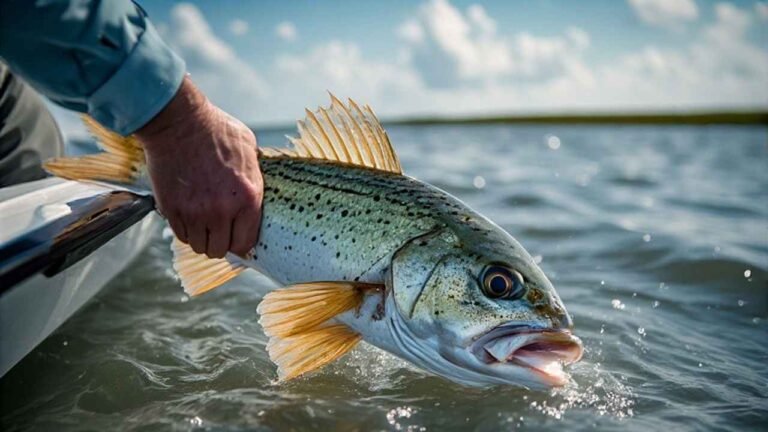
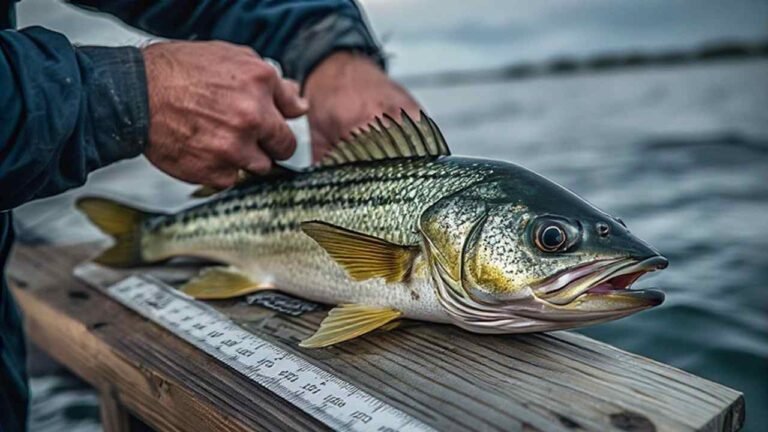
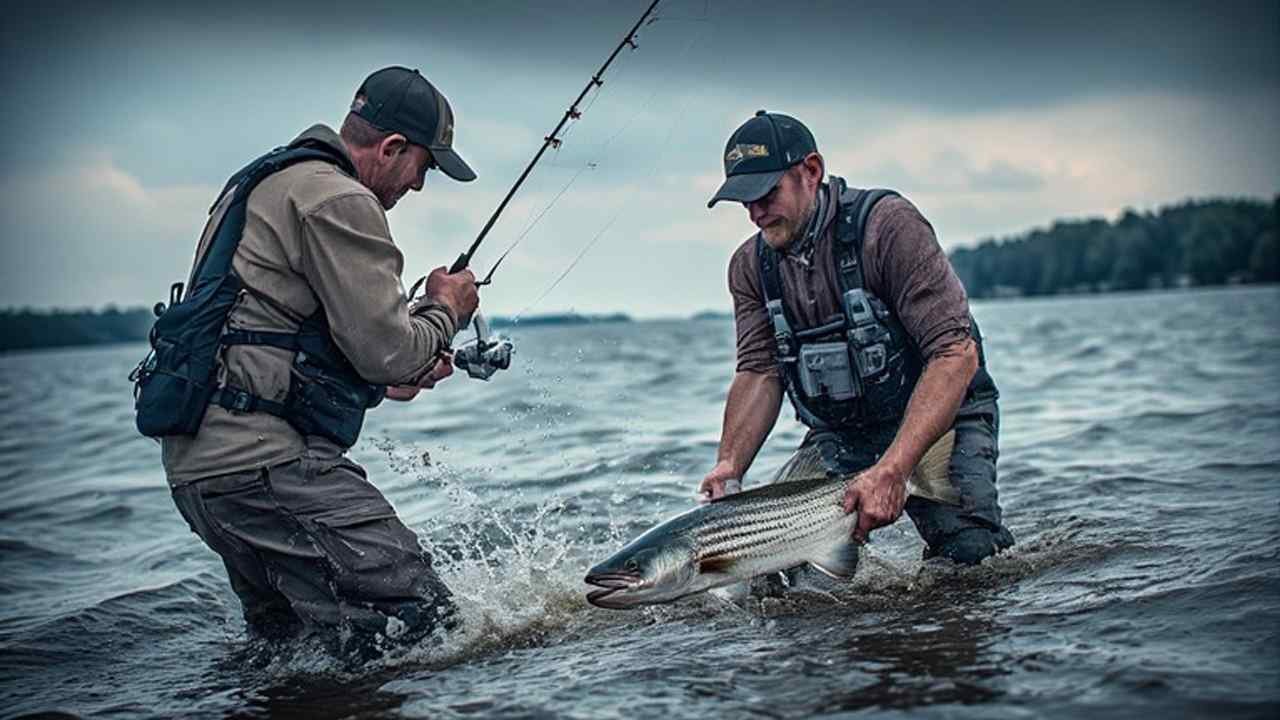
Striped bass are Delaware’s most complex and most watched species. The harvest framework governing “rockfish,” as locals often call them, is regionally coordinated and subject to tighter scrutiny than almost any other game fish in the state. In 2026, the ocean slot remains at 28–35 inches with a one-fish daily possession limit. In Delaware Bay and the tidal river zones, the summer window (July 1–August 31) carries a reduced slot of 20–<25 inches — a targeted measure to allow anglers to harvest smaller, more abundant fish while protecting larger spawning-age females. April through May, striped bass fishing near known spawning grounds is catch-and-release only. Non-offset circle hooks are now required when fishing with bait for striped bass across tidal waters, reducing release mortality. Anglers who overlook this requirement — or who don’t understand the zone-specific slot changes — are among the most frequently cited for violations.
Trout 🎣
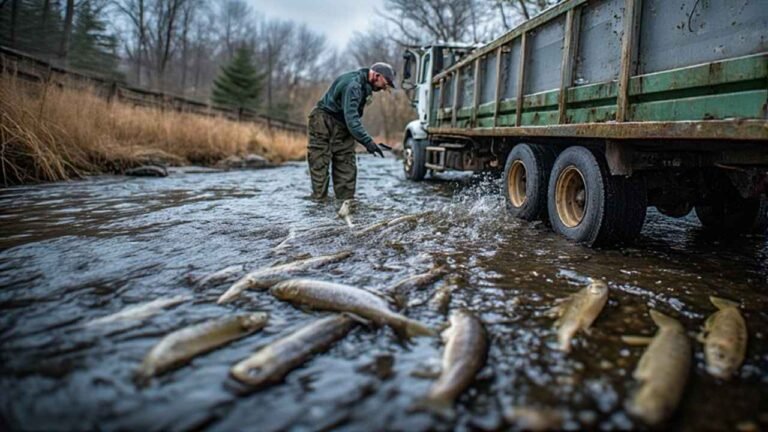
Delaware doesn’t have wild, self-sustaining trout populations in most waters — summer temperatures are simply too warm. What it does have is a robust stocking program managed through DNREC, with rainbow trout stocked in designated streams and ponds from early spring through spring, and again in fall. The trout stamp is not optional; it’s required during April through June 30 and again through October and November. The daily possession cap is six fish in most stocked waters, dropping to four in designated fly-fishing streams. Fly-fishing restrictions on Brandywine Creek above Chambers Rock Bridge make that stretch one of the most specialized freshwater experiences in the state. The common mistake? Fishing in designated trout areas after half an hour past sunset — a specific rule that trips up anglers unfamiliar with Delaware’s time-based restrictions.
Catfish and Panfish
Channel catfish, blue catfish, bluegill, crappie, and yellow perch fill out Delaware’s freshwater panfish scene and attract more casual anglers than almost any other group. These species carry fewer restrictions and longer open windows, making them ideal entry points for newer fishermen. Ponds like Lums Pond and Beck’s Pond are stocked or naturally sustain healthy populations. Creel limits are more generous on panfish, and size minimums are either minimal or absent on species like bluegill. The biology behind this is straightforward — high-reproduction species can sustain heavier harvest pressure than slower-maturing, slower-reproducing predators like striped bass.
Also, if you’re curious how neighboring Mid-Atlantic states handle their freshwater policies, Colorado’s freshwater harvest framework offers an interesting conservation comparison for mountain-region trout management.
🛑 Waters With Extra Restrictions
Some Delaware waters carry conditions that go beyond standard licensing and creel rules. Before casting in these areas, anglers need to know what’s different:
- ✅ Designated Fly-Fishing Stretches — Brandywine Creek north of Chambers Rock Bridge is restricted to fly-fishing methods only. Conventional gear is not permitted in this zone.
- ✅ Trout Sunset Closure — All designated trout streams and ponds enforce a no-fishing rule beginning 30 minutes after sunset. Time-based violations here are enforced.
- ✅ Striped Bass Spawning Ground Closures — Tidal waters identified as spawning grounds are catch-and-release only from April 1 through May 31. Retaining striped bass during this window is a violation regardless of size.
- ✅ Recreational Gill Net Removal Periods — In Delaware Bay during May 2026, recreational gill nets must be removed on specific dates. Failure to comply during these windows carries enforcement consequences.
- ✅ Surf Fishing Vehicle Permit Zones — Driving a vehicle on beach access areas at Cape Henlopen, Delaware Seashore State Park, and Fenwick Island requires a valid surf fishing vehicle permit. This is separate from your fishing license.
- ✅ Fish Consumption Advisories — Brandywine Creek and certain tributaries carry consumption advisories from the National Park Service and DNREC. Anglers are advised to limit consumption to no more than six 8-oz servings per year of fish caught from these waters. Keeping fish is legal — but knowing the advisory is important for personal health.
- ✅ Courtesy Dock Restrictions — At tidal access areas, courtesy docks are for launching and retrieving boats only. Fishing from courtesy docks is explicitly prohibited.
🐠 Low-Complexity Fisheries for Casual Anglers
If you’re new to Delaware or just want a relaxed day on the water, these fisheries offer forgiving rules and accessible conditions:
| Species | Regulation Simplicity | Common Location Type | Best For |
|---|---|---|---|
| Bluegill / Sunfish | 🟢 Open / Flexible — minimal restrictions | Freshwater ponds, state park lakes | Families, kids, first-timers |
| Yellow Perch | 🟢 Open most of year — general creel applies | Millponds, slow rivers | Easy winter/early spring fishing |
| Black Crappie | 🟢 General statewide rules; no complex slots | Public ponds (Beck’s, Killens) | Panfishing from shore or dock |
| Channel Catfish | 🟡 Moderate — statewide rules, longer open window | Larger ponds, river sections | Evening anglers, beginners |
| Bluefish | 🟡 Seasonal — bag limit applies (7-fish in 2026) | Delaware Bay, surf zones | High-energy surface fishing |
| Black Sea Bass 🐟 | 🟡 Moderate — size minimum, bag limit varies by period | Coastal ocean, offshore reefs | Boat anglers, mid-year focus |
🏞️ Access & Property Considerations
- Navigable Waters Doctrine — Delaware’s navigable waterways are generally public below the mean high-water mark. The water surface is public; adjacent upland is not.
- Boat Launch vs. Shoreline Access — DNREC maintains a network of state and municipally owned boat ramps. Some ramps carry fees or permits — confirm before launching. Shoreline access at freshwater public ponds is open year-round, 24 hours a day.
- Public Access Markers — DNREC-managed freshwater ponds have defined boundaries. Look for posted markers to identify where public shoreline access begins and ends.
- Private Land Boundaries — Crossing private farmland or timberland to reach a waterway without landowner permission is trespassing, even if the water itself is public.
- Delaware River Border Waters — On the Delaware River above the Commodore Barry Bridge, a valid fishing license from either Pennsylvania or New Jersey is recognized on both shorelines. Anglers fishing the river’s tidal sections from Delaware still need a valid Delaware license.
- Courtesy Docks at Tidal Access Areas — These are launch-and-retrieve-only structures. Fishing from these docks is not permitted under current tidal access area rules.
- Federal and NPS Overlaps — First State National Historical Park areas along Brandywine Creek fall under National Park Service jurisdiction. General NPS fishing rules and DNREC consumption advisories both apply.
🎟️ Before You Cast: Legal Checklist
- ☑️ Resident or Non-Resident Status — Delaware residents aged 16–64 require a general fishing license. All non-residents 16 and older require one regardless of age cap.
- ☑️ Age Exemptions — Delaware residents 65 and older are exempt from the fishing license requirement but must carry proof of age and residency.
- ☑️ Visitor and Daily Passes — Non-residents may purchase annual or daily fishing licenses through Digital DNREC. Charter boat passengers are exempt — the vessel’s captain holds the required credentials covering aboard anglers.
- ☑️ Free FIN Number — Anglers who are exempt from paying for a license (due to age or other exemptions) must still obtain a free FIN (Fishing Identification Number) through Digital DNREC. Fishing without it is still a compliance issue.
- ☑️ Trout Stamp Endorsement — Required separately from the general license during April–June 30 and October–November for any angler targeting trout in designated waters.
- ☑️ Surf Fishing Vehicle Permit — Separate from your fishing license. Required to drive on designated beach areas at state parks. Holders of this permit are exempt from the standard fishing license requirement only while operating from that permitted vehicle.
- ☑️ Reporting Obligations — Certain species and program-based catches may require reporting to DNREC. Stay current with any tagging or survey participation programs announced in the annual fishing guide.
- ☑️ Free Fishing Days — June 7–8, 2026: No license needed. All other rules (size, possession, gear) remain enforced.
🧭 Planning Tools Every Delaware Angler Should Bookmark
Delaware’s regulatory ecosystem is well-supported by digital tools that make pre-trip planning straightforward. The official Delaware fishing regulations via eRegulations is one of the most accessible and comprehensive digital digests available, covering tidal and non-tidal species side by side with updated 2026 creel limits, size minimums, and season structures. It’s updated as in-season changes are announced.
DNREC publishes a weekly Delaware Fishing Report on its Division of Fish and Wildlife website — an underused resource that tells you exactly what’s biting, where, and under what conditions. During peak windows like May and September, these reports become genuinely valuable for planning day trips. DNREC also publishes trout stocking schedules online, which allows freshwater anglers to time visits to designated ponds and streams around actual stocking events rather than guessing.
The Digital DNREC portal handles all license and permit purchases, FIN number registration, and trout stamp endorsements. There’s no reason to show up at a bait shop hoping to handle paperwork — it’s all mobile-accessible. DNREC’s public freshwater pond mapping system shows locations, acreage, species present, and access notes for more than 30 managed ponds across the state. Finally, DNREC’s fish population survey data — published periodically — gives anglers meaningful context on why certain ponds have size minimums where others don’t.
❓ Real Scenarios Delaware Anglers Actually Ask About
“I’m visiting from out of state for a weekend — do I need a full annual license, or is there a day pass?”
Yes, non-resident daily passes are available through Digital DNREC. You don’t need to commit to an annual purchase. Remember that June 7–8, 2026 are free fishing days statewide, so if your trip falls during National Fishing and Boating Week, you can skip the license entirely — though all size and possession rules still apply.
“Can I fish the Delaware River with my New Jersey license?”
Above the Commodore Barry Bridge, yes — a valid NJ or PA fishing license is recognized on both shorelines of the Delaware River in that stretch. Below that bridge, in tidal waters, you’ll need a Delaware license specifically.
“I want to take my kids fishing at a state park pond. Do they need a license?”
Children under 16 do not need a fishing license in Delaware. They can fish freely on public freshwater ponds throughout the state. Adults accompanying them do need valid licenses if they’re also fishing.
“Is there a time of day I can’t fish for trout in Delaware?”
Yes. In designated trout streams and ponds, fishing is prohibited starting 30 minutes after sunset. This is a specific, enforced rule that differs from general freshwater pond policy where no time restrictions exist.
“I heard striped bass rules are different in the Bay versus the ocean — is that true?”
Correct. The slot size for striped bass shifts geographically in 2026. In the ocean, the slot is 28–35 inches (one fish). In Delaware Bay, the river, and tidal tributaries during July 1–August 31, the allowable slot drops to 20–<25 inches (one fish). You need to know which body of water you’re fishing, not just which state you’re in.
“Do I need special gear to fish for striped bass with bait?”
Yes. Non-offset (inline) circle hooks are now required when fishing for striped bass with bait in all Delaware tidal waters. This rule reduces release mortality and is actively enforced.
“Can I fish from the boat ramp dock at a tidal access area?”
No. Courtesy docks at Delaware’s tidal access areas are intended only for launching and retrieving watercraft. Fishing from those structures is not permitted under current access area rules. Fish from the shoreline or from your boat once you’ve launched.
🗺️ Well-Known Waters Under the 2026 Framework
Lums Pond State Park is the crown jewel of Delaware freshwater fishing. At roughly 200 acres, it’s the largest freshwater millpond in the state and sits in New Castle County, accessible year-round. Its largemouth bass population is exceptional — surveys have found approximately one in five bass measured over 18 inches, making it a legitimate destination fishery rather than just a casual spot. Bluegill, crappie, catfish, and pickerel round out the species list. Regulation tone here is moderate — standard statewide freshwater rules apply, and boat access is available with a strict no-wake speed requirement across the water. The atmosphere is family-friendly but serious anglers show up before dawn for bass.
Beck’s Pond in Bear carries a relaxed, community feel. Located in New Castle County, this urban-adjacent pond draws an eclectic mix of anglers chasing largemouth bass, bluegill, white and black crappie, and yellow perch. It’s not a trophy fishery by reputation, but it’s reliable, accessible from shore, and governed by straightforward statewide rules — no complex overlays or special endorsements required for most species. It’s one of the most beginner-friendly spots in northern Delaware.
Killens Pond State Park in Kent County offers similar accessibility with a more rural backdrop. The pond draws anglers looking for largemouth bass and a broad panfish mix. Delaware State Parks notes it as one of the top freshwater fishing destinations in the southern part of the state, with several youth fishing tournaments held annually. Regulation tone is moderate and standard — no special zones or gear restrictions on the main pond.
Brandywine Creek earns a different kind of attention. It’s the most technically regulated freshwater fishery in Delaware, with fly-fishing-only restrictions in its upper reaches above Chambers Rock Bridge. It’s also the subject of DNREC and NPS consumption advisories — fish here, but be informed about what you take home. The atmosphere is more contemplative and method-specific than anywhere else in the state, attracting serious fly anglers rather than casual families.
Indian River Inlet and Cape Henlopen represent the state’s saltwater prestige. Striped bass, bluefish, spot, and croaker are seasonally abundant. Cape Henlopen State Park’s fishing pier extends into prime coastal waters, and the surf fishing culture along Delaware’s coastline is active from spring through late fall. Rules here are the most layered of any Delaware fishery — seasonal slots, gear requirements, possession caps, and the surf vehicle permit requirement all apply. The atmosphere is energetic and community-driven, especially during fall striper runs.
If you’re also comparing harvest frameworks across neighboring states, California’s managed fisheries system offers another useful reference point for understanding how coastal states balance marine and freshwater regulation complexity.
✅ Your 2026 Delaware Water Check: What Sticks With You When You Leave the Dock
Delaware’s angling calendar is more nuanced than its small geography suggests. The state’s regulated catch windows span everything from fly-fishing-only creek stretches to interstate striped bass slot frameworks that shift by zone and by month. The major open-water periods — particularly the May through October run — pack in the widest species diversity and the busiest regulatory calendar. Black sea bass comes online in mid-May with expanded quotas. Striped bass require zone-specific slot awareness from spring through fall. Trout demand a separate stamp and a hard sunset cutoff. Freshwater panfish remain welcoming for new anglers throughout most of the year.
Conservation compliance isn’t a formality here — it’s woven into how Delaware manages fish populations across water types that include spawning migration corridors, fragile bay ecosystems, and federally overlapping river stretches. Bringing the right gear, holding the right permits, and knowing which body of water you’re standing next to aren’t just legal obligations. They’re the habits that keep Delaware worth fishing for the next generation of anglers too.