Hunting Regulations in Arkansas (2026-2027) – Tags, Weapons, Zones & Rules
Planning your first hunting adventure in The Natural State? Arkansas offers some of the best hunting opportunities in the country, from world-class waterfowl to abundant whitetail deer. But before you head out, you’ll need to understand the state’s hunting requirements and rules. Don’t worry – we’ve broken down everything you need to know about Arkansas hunting regulations for 2025, from licensing to legal weapons to safety requirements.
Arkansas takes its hunting seriously, and the Arkansas Game and Fish Commission (AGFC) has established clear guidelines to ensure safe, ethical, and sustainable hunting for everyone. Whether you’re a resident or visiting from out of state, getting familiar with these rules will help you have a successful and legal hunting experience.
The Arkansas Game and Fish Commission (AGFC) has officially approved a major package of regulation changes for the 2026-2027 hunting seasons. The overarching goal is to simplify and streamline rules for hunters, with many changes taking effect on July 1, 2026. Over 200 changes were incorporated, eliminating many outdated or redundant regulations.
Here are the most significant updates for deer and other hunting regulations:
🦌 Key Deer Hunting Changes for 2026-2027
The deer hunting regulations have seen the most significant consolidation to make them more uniform and easier to understand. The final approved changes align closely with what was initially proposed.
| Regulation Aspect | New 2026-2027 Rule | Previous/Key Details |
|---|---|---|
| Season Structure & Bag Limits | Standardized limits based on land type and zone. | |
| Statewide Limit | Remains six deer total, with no more than two being antlered bucks. | Unchanged from previous years. |
| Private Land Zone Limit | Four deer per zone (no more than two bucks). | Standardized across all zones. |
| WMA Limit | Three deer per WMA (no more than two bucks). | Standardized across WMAs. Hunters can travel to other zones/WMAs to reach the statewide limit of six. |
| Deer Categorization | Deer are classified as “antlered bucks” or “antlerless deer”. | Button bucks count toward the antlerless bag limit. |
| Early Archery Buck Season | Starts on the last Saturday in August (a three-day hunt). | Moved earlier to allow for velvet hunting and avoid conflicts with dove season. |
| New WMAs/Zones | Maumelle River WMA, U of A Pine Tree WDA, and all cooperative WMAs (e.g., Arkansas Natural Heritage Commission, U.S. Forest Service) were added to the early archery buck-only season. | Grant and Sevier counties are now part of the Chronic Wasting Disease (CWD) Management Zone. |
| WMA Status Changes | Camp Robinson SUA → Lake Conway WMA; J. Perry Mikles Blue Mountain SUA → J. Perry Mikles Lick Creek WMA; New Oakwood WMA and Queen Wilhelmina State Park WMA established. | These changes are part of broader land and access management. |
| Equipment | Modern centerfire firearms are now legal in Private Land Deer Zones 4 and 5. | |
| Hunting with Dogs | Dogs pursuing deer, fox, or coyote on public land must wear collars capable of GPS positioning and electronic correction. | New regulation for public land dog hunting. |
🌊 Other Key Updates & New Regulations
In addition to deer, the AGFC’s “streamlining” effort has affected other areas of hunting and general WMA access.
- WMA Access & Permits: A significant change requires anyone 16 and older accessing an AGFC-owned WMA for any activity (camping, hiking, birding, etc.) to have a valid hunting or fishing license, or an AGFC WMA/Lake Conservation Permit ($10.50).
- Leased Lands Permit: All leased land WMAs are now accessible through a single, $75 Leased Lands Permit, replacing multiple individual permits.
- Waterfowl Season Dates: The 2026-2027 duck season dates are officially set for Nov. 21-29, Dec. 10-23, and Dec. 26, 2026-Jan. 31, 2027.
- Waterfowl WMA Access: Several popular waterfowl WMAs will have new “non-motorized boat only” access areas to reduce crowding and hunter conflicts. This includes portions of George H. Dunklin Bayou Meto WMA, Dave Donaldson Black River WMA, and Shirey Bay Rainey Brake WMA.
- Permit Draw for Waterfowl: A new proposal (still under public comment as of July 2026) would establish a drawn permit hunt for waterfowl on a portion of the St. Francis Sunken Lands WMA.
- Light Goose Conservation Order: A valid Arkansas hunting license and state duck stamp are now required to participate in the light goose conservation order.
- Non-Resident Waterfowl: Non-residents are prohibited from waterfowl hunting at Dave Donaldson Black River WMA during the first segment of the regular duck season (Nov. 21-29, 2026).
✅ Final Steps and Resources
The AGFC is using a new schedule, where both hunting and fishing regulation changes now take effect on July 1 of each year to simplify the process for the public.
- Official Guidebook: The 2026-2027 regulations are now in effect. Be sure to check the official Arkansas Hunting Guidebook for complete details and any specific WMA regulations. Look for the version with a green border effective July 1, 2026.
- Permit Applications: For deer permits on WMAs, the application period typically runs from June 1 to July 1. For 2026, leftover permits opened on July 13. Check the AGFC website for current application windows.
- Public Comment: The AGFC continues to accept public comments on some new proposals, such as the waterfowl draw at St. Francis Sunken Lands WMA, via regulations@agfc.ar.gov.
🎟️ License & Tag Requirements in Arkansas
Who Needs a Hunting License?
If you’re 16 or older, you’ll need an Arkansas hunting license to pursue wildlife, unless you’re on a licensed game-bird shooting resort. The good news? Kids under 16 get a break – they can hunt without a license, though they still need to follow all other hunting rules and safety requirements.
Resident Licensing Options:
For Arkansas residents, the most popular choice is the Resident Sportsman’s License ($25.00), which covers all game species and includes six deer tags and two turkey tags. Want fishing privileges too? The Combination Sportsman’s License ($35.50) adds fishing rights to your hunting license.
If you’re just getting started or only planning to hunt small game, the Resident Wildlife Conservation License ($10.50) might be perfect – it covers small game and includes one deer tag.
Non-Resident Licensing:
Visiting hunters have several options depending on their needs. The Nonresident Annual All Game Hunting License ($410.00) is the most comprehensive, covering deer and small game with six deer tags included. For shorter trips, consider the 5-Day Deer Hunting License ($225.00) with two deer tags or the 3-Day Deer Hunting License ($175.00) with one deer tag.
Planning to hunt turkey? Non-residents need either the Nonresident Annual Turkey Hunting License ($325.00) or must add a Nonresident Turkey Tag ($100.00) to their annual license.
Special Permits & Tags:
Some species require additional permits:
- Bear hunting: Free resident bear tag, $300 non-resident permit
- Turkey hunting: Free resident tags (limit two per year), $100 non-resident tags
- Elk hunting: $300 non-resident permit (residents free with proper license)
- Alligator hunting: $300 non-resident permit
Where to Buy:
Purchase your license online at the AGFC website, at licensed dealers throughout the state, or at any AGFC regional office. The online system is available 24/7 and is often the most convenient option.
Senior Discounts:
Arkansas residents 65 and older can purchase a 65-Plus Lifetime Hunting License for just $25.00, which provides the same privileges as the regular Sportsman’s License for life.
🔫 Legal Weapons & Season Methods
Arkansas hunting regulations vary by species and hunting method, so understanding what’s legal when is crucial for staying compliant.
Archery Equipment:
Archery hunting has the longest seasons in Arkansas, typically running from late September through February. Legal archery equipment includes compound bows, recurve bows, and longbows with a minimum draw weight of 35 pounds. Crossbows are legal during all seasons when archery equipment is allowed.
Modern Firearms:
During modern gun seasons, hunters can use centerfire rifles, shotguns with slugs or buckshot, and handguns with barrels at least 4 inches long. Semi-automatic rifles are permitted, but magazine capacity may be restricted in some areas.
Alternative Firearms (Formerly Muzzleloader):
The alternative firearms category now includes traditional muzzleloaders (.40 caliber or larger for deer) and certain straight-wall cartridge rifles. Popular cartridges include .350 Legend, .450 Bushmaster, and similar rounds designed for this category.
Safety Requirements:
All hunters must wear at least 400 square inches of blaze orange or hunter safety green above the waist, plus a blaze orange or safety green hat when hunting during firearm seasons for deer, bear, or elk. This requirement applies to anyone in the hunting party, even if they’re not actively hunting.
Hunter Education:
Arkansas requires hunter education certification for all hunters born after January 1, 1969. First-time hunters can obtain a Deferred Hunter Education License (free) that allows them to hunt for one year while completing their certification.
📍 Hunting Zones & Units in Arkansas
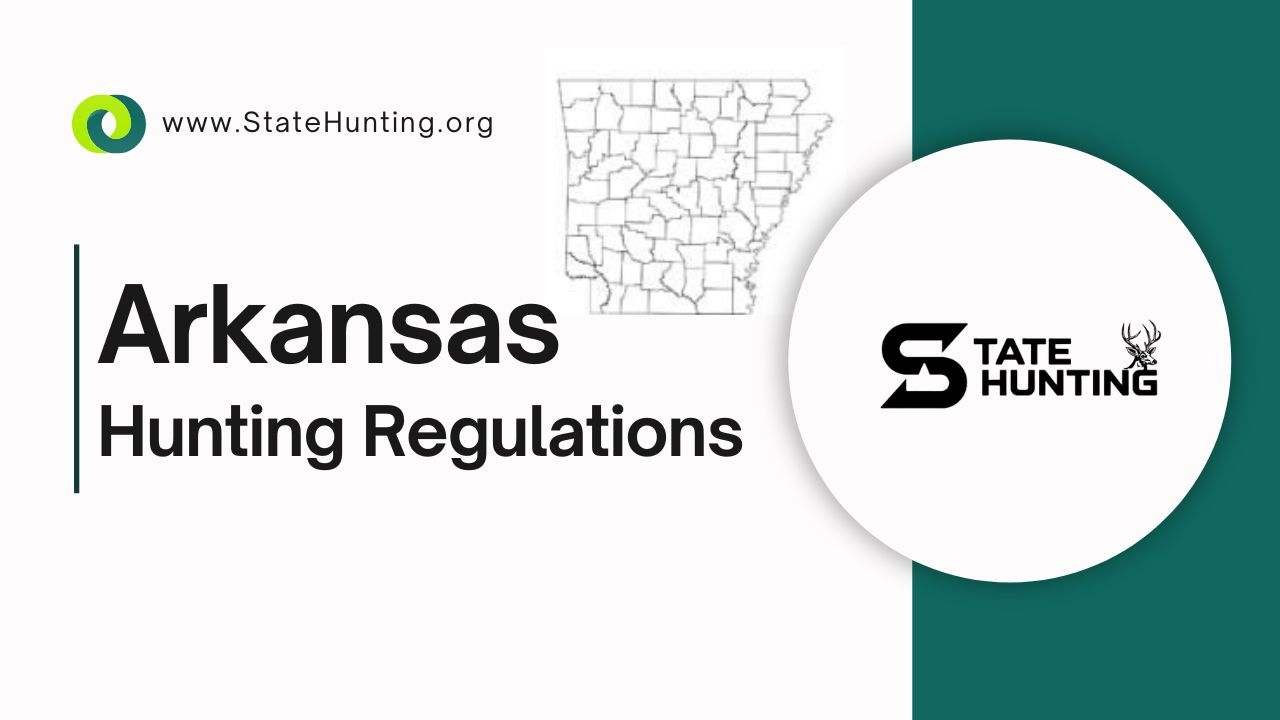
Arkansas divides the state into 19 different deer hunting zones, each with specific rules, seasons, and bag limits. Understanding your zone is essential because regulations can vary significantly between areas.
Zone System Overview:
The zone system helps manage deer populations across different regions of the state. Some zones allow dog hunting during certain periods, while others prohibit it entirely. Antler restrictions also vary – some zones require bucks to have at least three points on one side, while others have more restrictive rules requiring specific beam lengths or inside spreads.
Chronic Wasting Disease (CWD) Areas:
Several counties have special CWD regulations designed to monitor and control this deer disease. In CWD zones, antler restrictions may be relaxed, and hunters are often required to submit harvested deer for testing.
Wildlife Management Areas (WMAs):
Arkansas has numerous WMAs offering public hunting opportunities. Each WMA may have specific rules beyond general state regulations. A General WMA Hunter Use Permit (free) is required to hunt on these areas, and some WMAs require additional special permits for certain hunts.
Zone Maps:
The AGFC website provides detailed zone maps showing boundaries and specific regulations for each area. These maps are updated annually, so always check the current version before your hunt.
📅 AR Season Timing & Bag Limits (Brief Overview)
2025-26 Deer Season Highlights:
- Early Buck Archery: September 6-8, 2025
- Regular Archery: September 27, 2025 – February 28, 2026
- Alternative Firearms: October 18-26 and December 13-15, 2025
- Modern Gun: November 8-30 and December 26-28, 2025 (varies by zone)
- Special Youth Hunts: November 1-2, 2025 and January 3-4, 2026
Bag Limits:
Deer bag limits vary significantly by zone, ranging from three deer in restrictive zones to five deer in more liberal areas. Most zones allow a maximum of two bucks, though the definition of “buck” can vary based on antler restrictions.
Turkey Seasons:
Spring turkey season typically runs from mid-April through early May, with fall turkey opportunities in many areas. Check specific zone regulations for exact dates and bag limits.
Waterfowl:
Duck seasons generally run from late November through January, with specific dates varying by zone and species. A federal duck stamp and HIP registration are required in addition to state licenses.
🙋 FAQ Section
Q: Can I hunt on my own property without a license?
A: Generally, no. Arkansas requires hunting licenses for anyone 16 or older, even on private property. However, landowners and their immediate family members may have some exemptions for hunting on their own land – check current regulations for specifics.
Q: What’s the minimum age to hunt alone in Arkansas?
A: Hunters must be at least 6 years old to harvest deer, bear, or turkey. Younger hunters need adult supervision, and all youth hunters should complete hunter education regardless of age requirements.
Q: Do I need blaze orange for archery hunting?
A: Only during periods when firearm seasons are also open in your area. During archery-only periods, blaze orange isn’t required, but it’s always recommended for safety.
Q: Can I use my out-of-state hunter education certification?
A: Yes, Arkansas recognizes hunter education certifications from other states and provinces, as long as they meet IHEA standards.
🔗 Helpful Resources & Official Links
- Arkansas Game and Fish Commission: www.agfc.com
- Online License Purchase: Arkansas Licensing System
- Zone Maps and Regulations: AGFC Hunting Information
- Current Season Dates: Deer Seasons by Zone
- Hunter Education Information: Contact AGFC at 833-345-0398
- WMA Information: Wildlife Management Areas
👋 Conclusion
Arkansas offers incredible hunting opportunities, but success starts with understanding and following the rules. From getting the right license to wearing proper safety gear, these requirements exist to protect both hunters and wildlife for future generations.
Remember that regulations can change, sometimes even during the season, so always check the official AGFC website or call their hotline at 833-345-0398 for the most current information. The investment in proper licensing and education pays off with safer hunts and better conservation outcomes.
Whether you’re pursuing your first Arkansas deer or adding to decades of hunting memories, following these guidelines will help ensure your hunting experience is both successful and legal. Good luck out there, and remember – the best hunt is always a safe hunt!
Always verify current regulations on the official Arkansas Game and Fish Commission website, as rules and dates may change. This guide provides general information and should not be considered a substitute for official regulations.